After the energy and provocation of Diesel, Milan Fashion Week SS27 shifts completely with Jil Sander. The Spring Summer 2027 show presents a vision that stands in contrast to the previous show: no spectacle, no performance competing for attention with the clothes. Here, everything is designed to bring the focus back to the essential — materials, silhouettes and the precision of volumes.
The collection initially moves through a rigorous palette dominated by black, blue, grey and white, colours that reinforce the brand’s minimalist identity. What gradually changes is above all the feeling of the season: from a colder, more austere interpretation of spring at the beginning of the show, the collection slowly transitions towards a lighter summer, without ever abandoning the pursuit of formal purity that represents one of Jil Sander’s most recognisable codes.
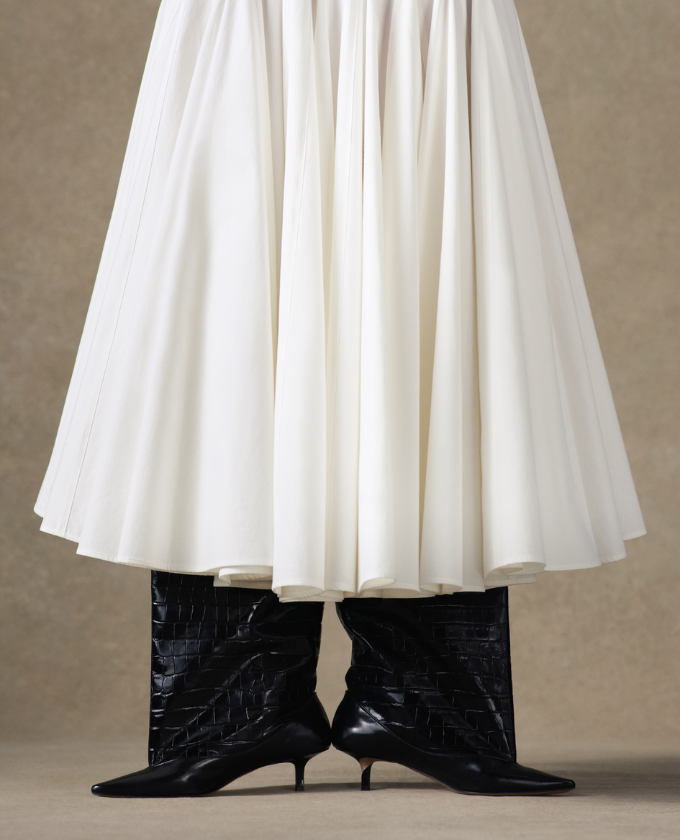
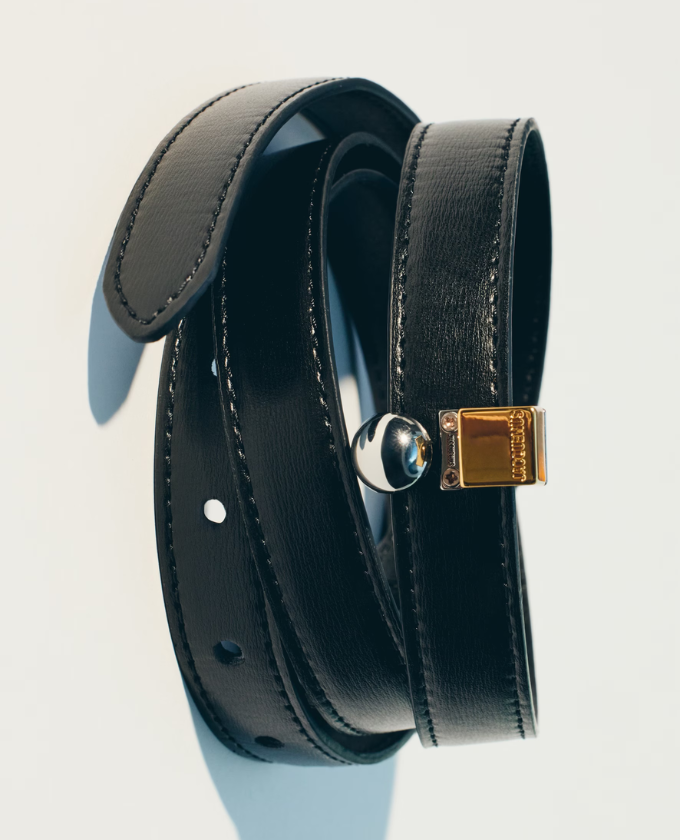
Materials also take centre stage. Leather, silk and cotton create contrasting surfaces and introduce a strong tactile dimension that becomes an integral part of the silhouette. They are not simply materials used to construct the garments, but elements that shape the perception of volume, alternating structure, fluidity and lightness.
The lines remain clean and precise, yet never lack character. Among the most distinctive elements are structured jackets with balloon sleeves and defined waists, presented in both womenswear and menswear. The silhouette therefore plays with the contrast between a more pronounced upper body and a narrower waist, creating a contemporary shape without relying on overly elaborate constructions.
Tailoring is one of the central themes of the collection. Suits and tailored ensembles move down the runway in both masculine and feminine interpretations, reaffirming the importance of sartorial construction within the brand’s creative research. Alongside the more rigorous tailoring, however, deconstructed and oversized trench coats introduce a more relaxed and contemporary dimension.
While Diesel transformed its show into an immersive experience, Jil Sander deliberately takes the opposite approach. The setting is sterile, minimal and almost suspended, while an initially solemn soundtrack accompanies the models before gradually becoming lighter in parallel with the collection. The result is a presentation in which it is not the spectacle that captures attention, but what is being worn.
And this is precisely where the difference between the two visions becomes clear. While Diesel builds an entire universe around its collection through energy, music, performance and provocation, Jil Sander removes almost everything that could distract from the garments. The essential becomes the true scenography.
Perhaps this is why the collection does not necessarily seek the so-called “wow effect” through an immediate novelty or an overtly spectacular gesture. Its strength lies instead in continuity: proportions, materials, tailoring and minimalism are brought back to the core of the Jil Sander identity and reinterpreted through a contemporary sensibility.
Following a show like Diesel’s, so rich in visual stimuli, Jil Sander becomes almost an exercise in subtraction. It does not seek to impress through excess, but to reaffirm identity through precision. And in a Fashion Week increasingly shaped by spectacle as well, choosing to let the clothes speak for themselves becomes, in its own way, a precise statement of style.